Blog
The New Authoritarian Playbook: When Elections Cement Power, Not Change
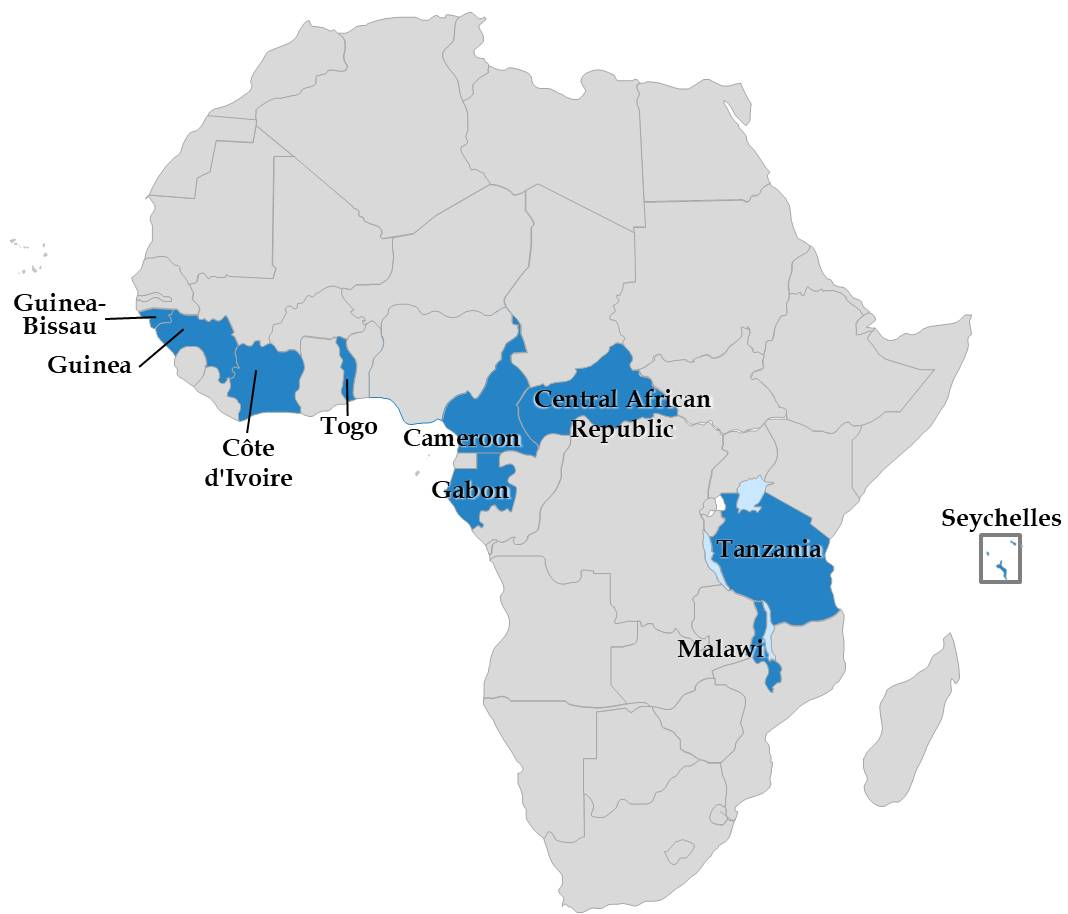
The year 2025 was a defining one for electoral politics in Africa, with national elections held across several countries. Rather than serving as instruments of popular will and change, however, most of these elections revealed a sophisticated new playbook for authoritarian consolidation. From Cameroon to Togo, polls were used to cement the power of incumbents, not to challenge it. While the democratic spirit endured in Malawi and Seychelles, the overarching trend was the clever manipulation of electoral processes to stifle genuine political alternation. In this article we analysed general elections already contested in ten African countries as at 30 December 2025 with two official results expected to be announced.

Photo Credit: African Center for Strategic Studies
The African Electoral Landscape of 2025: A Tale of Two Systems
The elections of 2025 presented a stark portrait of two diverging paths. On one end stood models of genuine democratic competition. Seychelles witnessed a peaceful two-round presidential election and transfer of power to Patrick Herminie. Similarly, Malawi saw the credible return of former president Peter Mutharika through a process respected by all sides. These cases proved that transparent elections and institutional integrity remain possible.
On the opposite extreme was Togo, which performed a constitutional charade. By transforming the presidency into a ceremonial role filled by an 86-year-old through parliamentary acclamation, the regime of Faure Gnassingbé emptied democracy of all meaning while he retained executive power. Between these poles lay a spectrum of manipulation from Cameroon’s managed competition, to Ivory Coast’s strategic disqualifications, then Gabon’s constrained post-coup transition, to Guinea-Bissau’s election-turned-coup, and Tanzania’s violent suppression of dissent.

The Cameroonian Template: Institutionalizing Lifetime Rule Through Managed Opposition

Cameroon offered a masterclass in subtle, institutionalized authoritarianism. The re-election of 92-year-old Paul Biya was engineered through a system that maintains democratic forms but ensures predetermined outcomes. The disqualification of the main challenger, Maurice Kamto, on a technicality, while allowing lesser opponents to run, created a façade of competition. This “competitive authoritarianism” is supported by several factors like a captured electoral commission, a tailored constitution, state-dominated media, and a first-past-the-post system that benefits a fragmented opposition. The regime calculates precisely how much democratic space is needed for international legitimacy without ever risking true political change.
The Ivorian Method: Constitutional Engineering and Strategic Exclusion
Ivory Coast demonstrated how constitutional reform and legal manoeuvres can reshape the political battlefield. President Alassane Ouattara’s 89.77% victory in 2025 followed a 2016 constitutional “reset” that allowed him to bypass term limits. The election’s real mechanism was the strategic disqualification of every serious rival, from Laurent Gbagbo to Guillaume Soro. The resulting boycott and a 50% voter turnout revealed a hollow mandate, showcasing “democratic authoritarianism”—where all institutions function, but the electoral field is surgically cleared of threats before a single vote is cast.
The Tanzanian Turn: When Subtlety Fails, Repression Follows
Tanzania represented the point where regimes abandon subtlety for outright repression. The disqualification of all major opposition parties led to a farcical 97% “victory” for President Samia Suluhu Hassan. The subsequent violent crackdown on protests, which left hundreds dead, crossed a line that even regional bodies criticized. Unlike Cameroon or Ivory Coast, where managed opposition acts as a pressure valve, Tanzania’s complete closure of space forced dissent into the streets, met with lethal force and international rebuke.
Guinea: The Coup Leader's Civilian Coronation
Guinea’s presidential election was a pivotal act in the now-standard script of post-coup “transition.” After seizing power in 2021, General Mamadi Doumbouya methodically set the stage for his own legitimization. He has extended the presidential term, made military leaders eligible to run, and barred or exiled major rivals. His campaign, anchored by grand promises funded by the Simandou mining project, transformed the election from a competitive race into a managed plebiscite for his new civilian presidency. This represents a modern hybrid model, military power seeking permanent, constitutional validation through a controlled electoral process.
Central African Republic: The Purge as Prelude to Victory
CAR’s election exemplifies the pre-emptive repression that defines the most brazen authoritarian strategies. President Faustin-Archange Touadéra’s removal of term limits via a contested 2023 referendum was followed by a widespread crackdown on opposition, civil society, and media. By the time of the vote, the political space had been so thoroughly eradicated that the election served merely as a state-managed reaffirmation of power rather than a contest. This method prioritizes eliminating any potential challenge long before election day, ensuring a result that is a foregone conclusion.
The Democratic Counter-Narratives: Malawi and Seychelles
Against this authoritarian wave, Malawi and Seychelles provided essential democratic counter-narratives. In Malawi, the incumbent’s graceful concession after a loss was a testament to institutional strength and a political culture that accepts electoral outcomes. In Seychelles, a high-stakes election focused on substantive issues like pensions and the environment, followed by a peaceful transfer of power, demonstrated that elections can be about governance, not just power. Both cases underscore the importance of independent institutions, strong civil society, and militaries subordinate to civilian authority.
The Crisis Cases: Guinea-Bissau's Collapse and Togo's Charade
Two cases stood out for institutional failure. Guinea-Bissau’s election collapsed into a military coup before results could be announced, revealing the fragility of democracy where state foundations are weak. Togo, conversely, displayed a sophisticated erosion of democracy through legalistic means, constitutional reforms that turned the presidency into a hollow figurehead, allowing the real ruler to remain in power without a direct electoral challenge.
The Regional Pattern: A Spectrum of Authoritarian Adaptation
Collectively, these elections map a spectrum of authoritarian adaptation. Cameroon represents subtle, institutional manipulation; Ivory Coast and Gabon show constitutional engineering; Tanzania exemplifies repressive overreach; and Togo illustrates the hollowing out of democratic form. Guinea-Bissau marks outright collapse, while Malawi and Seychelles show resilience. This is not random variation but a calculated set of strategies tailored to domestic and international tolerances.
The international community’s uneven response created perverse incentives. For instance, Cameroon and Ivory Coast faced muted criticism due to security cooperation and economic ties. Although Tanzania’s violence triggered sharper rebukes, Togo’s legalistic charade drew limited consequences. This calculus teaches regimes how much manipulation they can employ without facing severe repercussions, provided they avoid overt brutality and maintain a veneer of process.
The Democratic Resilience Question: Exception or Model?
The fundamental question arising from 2025 is whether Malawi and Seychelles are the emerging rule or the beleaguered exception.
The evidence suggests that sophisticated authoritarian systems are becoming more entrenched, using elections as tools for power preservation rather than popular choice. Democratic resilience requires rebuilding the foundational pillars which are truly independent electoral commissions, impartial judiciaries, protected civil societies, and a political culture that values process over personality. The elections of 2025 offer a concerning answer to the continent’s democratic trajectory, but the enduring examples of peaceful alternation prove that the hope for governance by consent is not yet extinguished.
Latest posts
The New Authoritarian Playbook: When Elections Cement Power, Not Change
Inside Cameroon’s Refinery: Desperation, Systemic Failure, And An Unprecedented Election

West Africa Civic Tech Conference 2025: Advancing Democracy Through Innovation

Reformers Of Africa Celebrates World Book And Copyright Day
Inec Must Learn From An Embarrassingly Flawed Presidential Election